Guide updated:
Open an image, inspect its dimensions and create a supported output copy.
Open this guide using the “How to use this tool” link below the tool name. It includes steps, screenshots and videos for computers and phones.
Before you start
Keep the original image. Converting a file does not guarantee support for every animation, layer or metadata field.
Try with a demonstration file — landscape.png
These small files were created for this guide and contain no personal data.
Step-by-step instructions
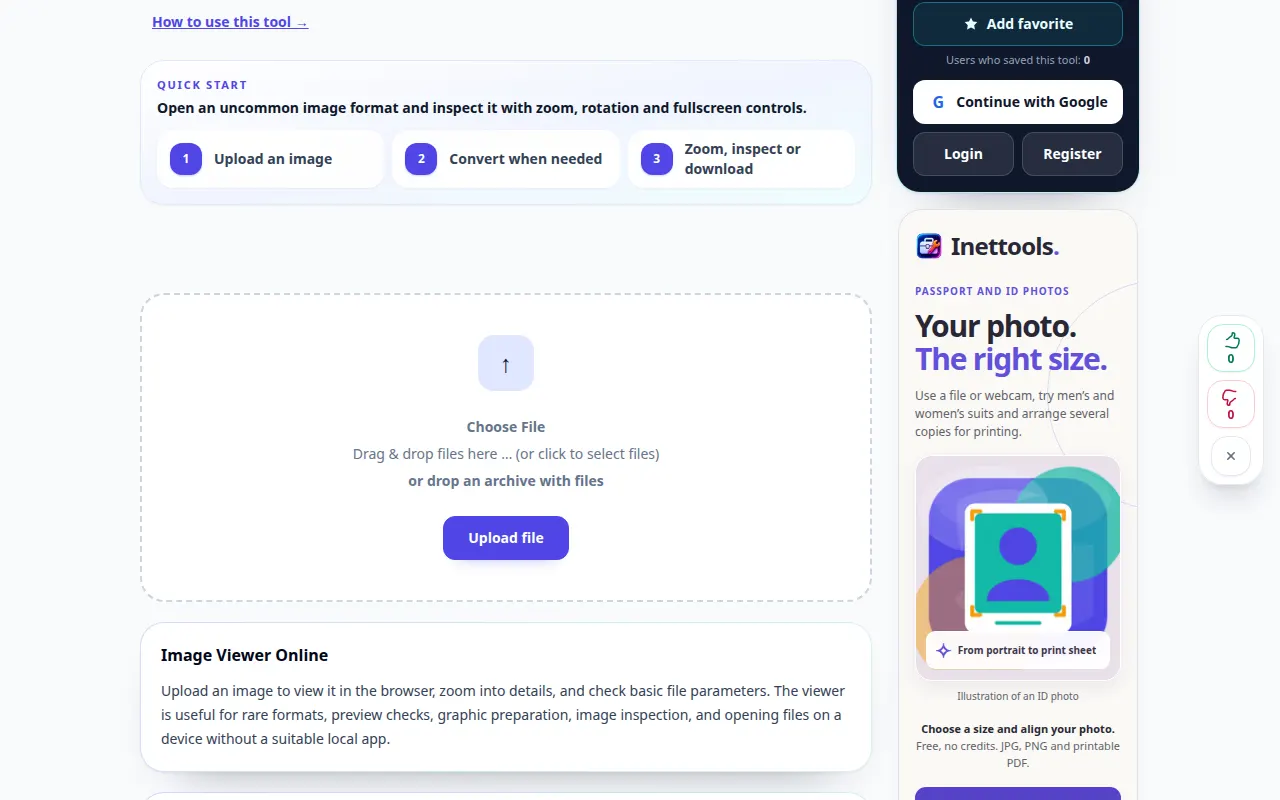
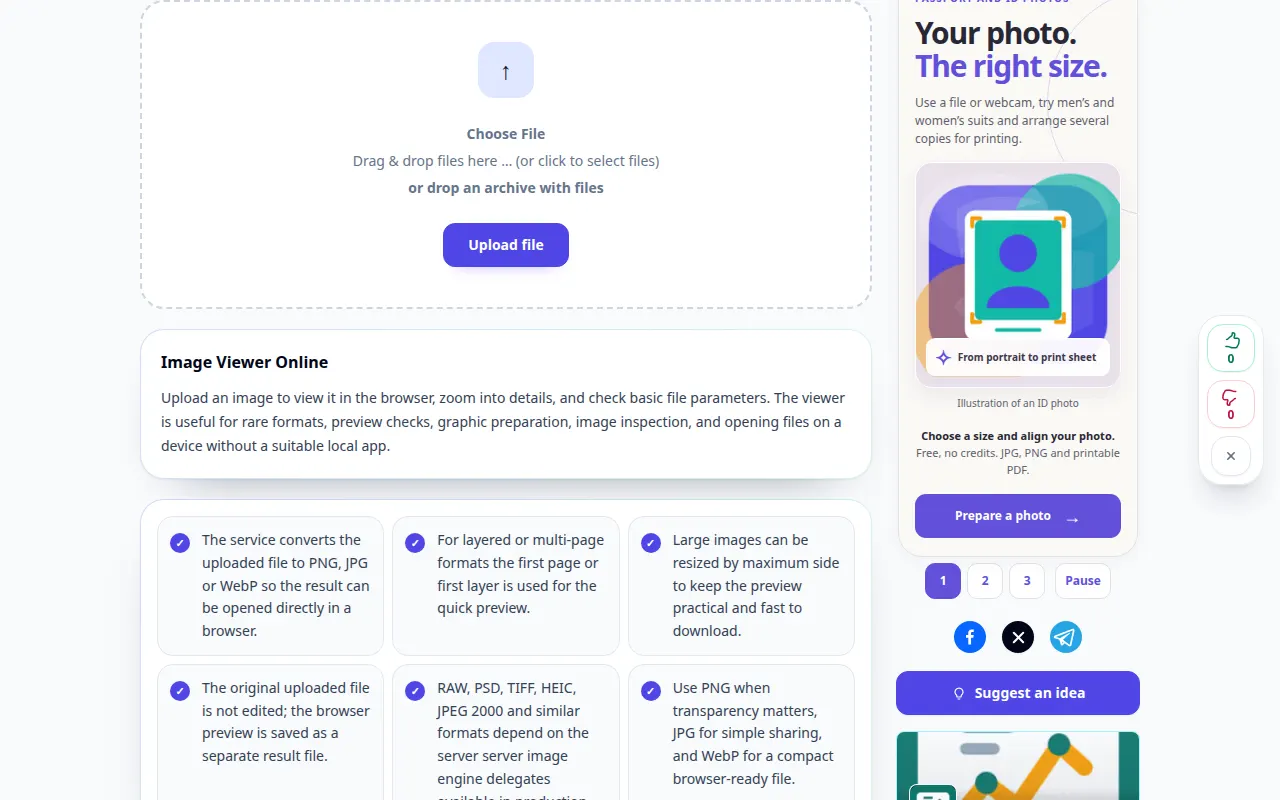
- Open Image Viewer and select an image accepted by the file picker.
- Wait for the preview and check the displayed dimensions and source information.
- Use the available zoom or viewing controls to inspect important details.
- Select an available output format and any format-specific options.
- Save the generated copy, open it to verify appearance and transparency, and keep the original.
On a computer
Use the full-width working panel to compare the source, settings and result. Keep the original file so you can try another setting without replacing it.
On a phone
Choose the source from Files or your device file manager. Scroll down to the settings and result; keep this tab open until the operation finishes.
In Safari on iPhone, open the sharing menu and choose Save to Files if the result opens in a new tab. In Android Chrome, check Downloads. Keep this tab open until processing finishes.
For a better result
Use PNG when transparency matters. A JPEG copy generally flattens transparency and introduces lossy compression.
Screenshots and video
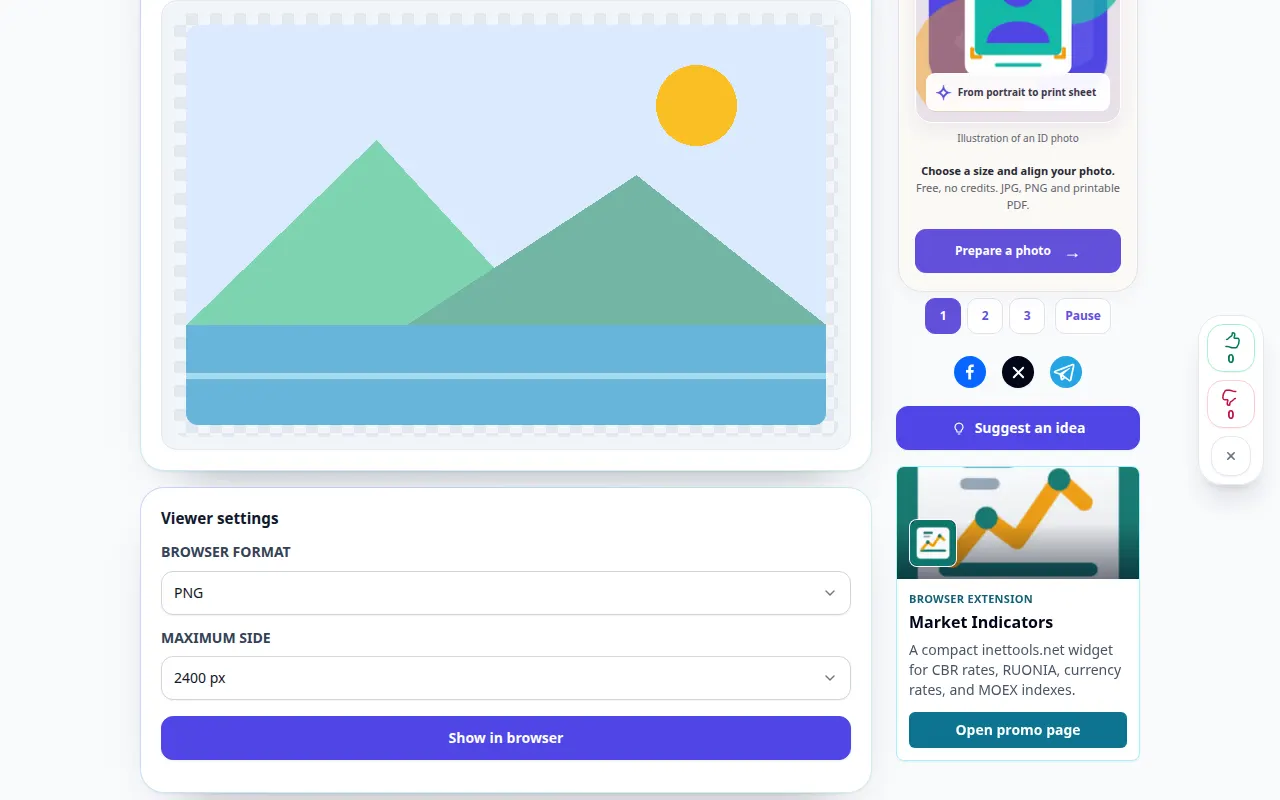
Desktop demonstration
The recording shows the English interface. Follow the translated steps above; the controls are in the same order. This recording shows a demonstration input and the resulting output in the tool.
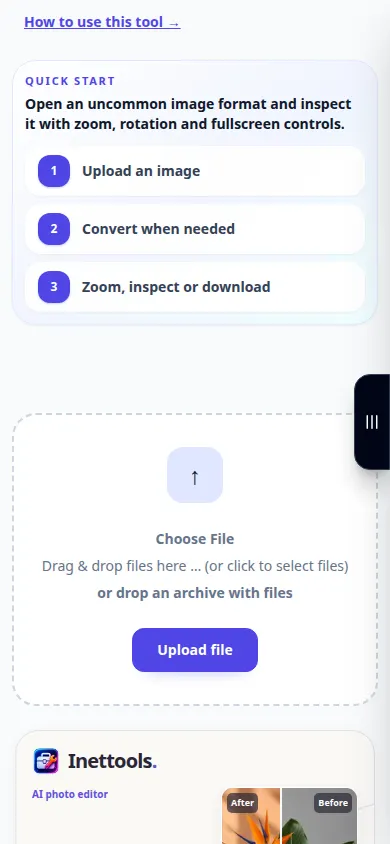
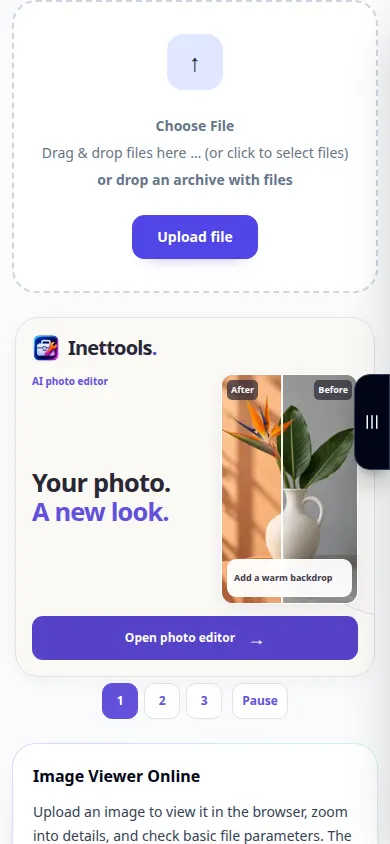
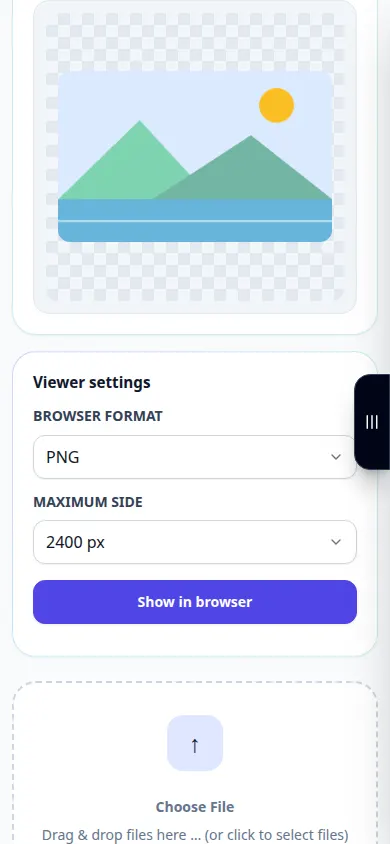
Phone demonstration
The recording shows the English interface. Follow the translated steps above; the controls are in the same order. This recording shows a demonstration input and the resulting output in the tool.
Questions and troubleshooting
Will conversion improve a blurry image?
Changing the file format does not restore missing detail. Use an enhancement tool if you need a separate restoration attempt.
Why is the output much larger?
Lossless formats can be larger than a compressed source. Compare file size and appearance before choosing the output.
If you see a message that the service is overloaded, wait and try again later. A failed attempt does not mean that your source file has changed.